

RV Window Coverings: How to Choose Curtains, Valances, Shades, and Insulation
This post may contain affiliate links.

Updating your RV window coverings is one of the easiest ways to transform both the appearance and comfort of your RV. Unlike replacing flooring or remodeling cabinetry, changing what’s on your windows can dramatically improve privacy, temperature control, light management, and the overall feel of your space, all without tearing your RV apart.
Here’s a little tip — If you’re just beginning to plan your renovation, it’s worth browsing these 44 Ideas for an RV Window Makeover first!
You may be surprised by how many options there are for RV window covers, from factory valances, pleated day/night shades, roller shades, blinds, blackout panels, and insulating window covers. They all play different roles, though, and choosing the right combination depends on how you travel, where you camp, and what problems you’re trying to solve.
This guide explains the pros and cons of every major type of RV window covering, who each option works best for, and when it’s worth upgrading. Along the way, you’ll also find links to more detailed RV Inspiration guides if you decide to dive deeper into a particular style or project!
Why RV Window Coverings Are Different From Home Window Treatments
You’re probably used to shopping for mini-blinds or curtains for a house, but shopping for RV window treatments isn’t quite the same.
The reason? RV windows are smaller, often custom-sized, and exposed to constant vibration while traveling. A curtain rod that works perfectly in a bedroom may shake loose after one rough stretch of highway, while residential blinds may rattle endlessly or refuse to stay in place.
Temperature is another major consideration. RV windows are one of the biggest sources of heat gain in summer and heat loss in winter. Even the nicest curtains won’t always provide enough insulation on their own, which is why many experienced RVers combine decorative window coverings with seasonal insulating solutions for the best of both worlds.
For year-round temperature control without sacrificing daylight, 6 Ways to Insulate Your RV Windows (That Don’t Block the Light!) offers several practical solutions.
Privacy also becomes much more important when mere feet separate you and another RV. The right coverings let you enjoy natural light while preventing neighboring campers from looking inside.
Finally (and something you’ve heard us say before!), every single pound matters in an RV. Heavy residential treatments, like heavy wool curtains for instance, can add unnecessary weight, making lightweight, travel-friendly materials the better long-term choice.
The Five Types of RV Window Coverings

RV Curtains
Curtains remain one of the most popular RV window coverings because they’re inexpensive, highly customizable, and available in nearly every fabric, color, and style imaginable.
Many RV owners replace outdated factory fabrics with simple curtain panels mounted on lightweight rods or tension wires. Depending on the fabric you choose, curtains can add softness to modern interiors or create a cozy farmhouse look.
Pros:
- Easy DIY project
- Inexpensive
- Huge variety of colors and fabrics for any style
- Can improve insulation with thermal fabric
Cons:
- May move while traveling if not secured
- Require proper mounting hardware
- Light leaks around the edges unless paired with liners
Best for:
DIY renovators, older RV remodels, and anyone wanting the biggest visual transformation on a modest budget.
Typical cost:
Approximately $20–$150 per window.
If you’re looking for creative ways to make your own, see DIY RV Window Treatments: 12 Ideas to Add Style and Privacy.
RV Valance Ideas
If you’ve ever noticed, factory valances are often very outdated, even the brand new ones. Valances often date an RV more than almost anything else, but fortunately, they’re also one of the easiest upgrades to do yourself!
Some owners opt to remove them completely for a cleaner, modern appearance, while others recover the existing wood frame with fresh fabric or build entirely new valances that complement updated décor.
Replacing valances can dramatically brighten an older RV without changing the underlying blinds or shades, which makes them great for new DIYers.
Pros:
- Quick cosmetic update
- Budget friendly
- Works with existing shades
- Great beginner DIY project
Cons:
- Primarily decorative
- Doesn’t improve insulation by itself
Best for:
Anyone refreshing an older RV interior without replacing every window treatment.
Typical cost:
$10–$75 per window if reusing existing frames.
For inspiration, browse RV Valance Ideas!

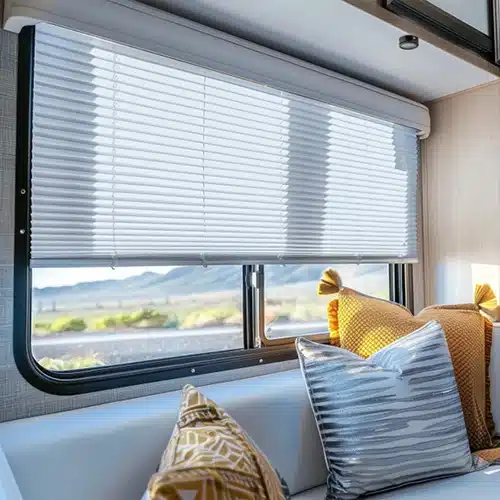
Day/Night Shades and Pleated Shades
For many motorhomes and fifth wheels, you may notice that pleated day/night shades have become the standard factory-installed option.
Their biggest advantage is versatility—sheer fabric filters daylight while maintaining some privacy, while the blackout section provides darkness when needed. However, the downside is durability. Anyone who’s owned an older RV has probably experienced broken strings or sagging pleats. Or even yellowed blinds from months of camping in sunshine!
Pros:
- Excellent light control
- Compact
- Factory appearance
Cons:
- Strings eventually fail
- Repairs can be frustrating
- Replacement costs add up
Best for:
Owners wanting to maintain the original look while improving functionality.
Typical cost:
$60–$250 per window.
Roller Shades
Modern roller shades have become one of the fastest-growing upgrades in RV renovations, and here is why…
Unlike pleated shades, quality roller shades operate smoothly, look clean and contemporary, and eliminate dangling cords which can be troublesome for kids and pets. Premium RV-specific systems such as MCD shades are designed to stay secure during travel while offering excellent privacy and light control.
Pros:
- Sleek appearance
- Easy operation
- Durable
- Excellent privacy
- Minimal maintenance
Cons:
- Higher upfront cost
- Some installations require custom sizing
Best for:
Full-time RVers, modern renovations, and anyone replacing worn-out pleated shades.
Typical cost:
$100–$400+ per window depending on brand.
If you’re comparing options, read The 6 Best RV Roller Shades or take a look at MCD Innovations..

Insulated and Blackout RV Window Coverings
Not every RV window covering is chosen for appearance. For example, many RV owners add seasonal insulation using Reflectix, magnetic insulated window covers, thermal curtains, or removable blackout inserts.
These products dramatically improve comfort in both hot and cold climates while reducing HVAC use. This can be really important to save on propane, or even overloading the electrical system when it’s hot outside.
Pros:
- Excellent energy efficiency
- Better sleeping conditions
- Reduced condensation
- Increased privacy
Cons:
- Some block outside views
- Seasonal storage required
- Less decorative
Best for:
Winter camping, desert camping, and full-time RV living.
Typical cost:
$10–$150 per window depending on material.

Choosing the Right RV Window Coverings
There isn’t a single “best” solution for every RV. Weekend campers often prioritize appearance, making new curtains or updated valances an affordable way to refresh the interior. Full-time travelers usually benefit from investing in durable roller shades paired with insulating window treatments (the improved privacy, longevity, and temperature control become noticeable after months on the road).
Climate also matters, almost more than anything! If you spend summers in Arizona, reflective insulation may matter more than decorative fabric. If you winter in northern states, layering thermal curtains with insulated inserts can make your furnace work significantly less.
Window shape influences your options too. Many RV windows are unique sizes that require custom solutions or DIY projects rather than off-the-shelf residential products, and depending on how quickly you need them, this can really influence your decision.
If you’re still exploring styles, browse 44 Ideas for an RV Window Makeover to compare real RV renovations before making a decision.
Common RV Window Covering Mistakes to Avoid
Many first-time renovators make the same avoidable mistakes, but no worries—we’re going to tell you so you don’t make them too!
First up, installing heavy residential curtain rods often leads to loose hardware after repeated travel vibrations. Choosing inexpensive fabric without UV resistance may save money initially, but direct sunlight quickly causes fading. Another common oversight is ignoring light leaks around the edges. Full-time RVers, shift workers, and parents with young children often discover that even blackout fabric doesn’t perform well unless side gaps are minimized.
Insulation is another area that’s frequently overlooked. Decorative RV curtains improve appearance, but combining them with insulated window coverings delivers much greater comfort in every season.
Finally, don’t sacrifice your view! One of the greatest joys of RV living is waking up to incredible scenery, so choose coverings that are easy to open and close throughout the day.

RV Window Insulation: A Critical Companion to Coverings
Many people searching for RV window insulation are actually trying to solve problems that curtains alone can’t fix. Single-pane RV windows lose heat rapidly in winter while allowing significant solar heat gain during summer. So while decorative window treatments help, insulating layers make the biggest difference!
Reflectix remains one of the most affordable options, although keep in mind that it blocks the view completely. Magnetic insulated panels provide a more finished appearance and are easy to remove during the day. Thermal curtains add another layer of protection, while clear insulating window film reduces drafts without blocking natural light.
Climate plays the biggest role in what strategy you’ll take. For instance, summer travelers often focus on reflecting heat before it enters the RV, while winter campers prioritize preventing warm interior air from escaping.
If insulation is your primary concern, don’t miss:
Using decorative coverings together with insulating materials gives you the best balance of comfort, efficiency, and appearance, like the image below!

Where to Buy RV Window Coverings and What They Cost
Fortunately, you don’t have to shop exclusively through RV dealerships for window coverings!
Budget-friendly curtains are available from IKEA, Target, Walmart, and Amazon. Etsy has become an excellent source for custom curtains, handmade valances, and RV-sized window treatments that fit unique layouts.
For premium upgrades, specialty retailers and manufacturers offer RV-specific roller shade systems designed to withstand travel.
As a rough guide:
- Curtains: $20–$150 per window
- Valance refresh: $10–$75
- Pleated shades: $60–$250
- Roller shades: $100–$400+
- Insulating window inserts: $10–$150
Many RV owners upgrade gradually, starting with the windows they use most often before completing the entire coach.
Final Thoughts on RV Window Coverings

The right RV window coverings do far more than improve your décor—they affect your comfort, privacy, energy efficiency, and even how much you enjoy the view outside your campsite.
If you’re planning a complete renovation, don’t feel like you need to replace everything at once. Updating one window, replacing dated valances, or installing better shades can completely change how your RV feels.
For more detailed tutorials and inspiration, explore the RV Inspiration guides linked throughout this article. Whether you’re sewing new curtains, replacing roller shades, or improving insulation for four-season camping, there’s a project that fits almost every budget and skill level.

Katherine Bitner spent a year full-time RVing with her husband and dog around the US. As a former interior designer, her favorite thing was budget-friendly ways to make her home on wheels feel luxurious and Pinterest-worthy! She is now a full-time writer and author.


